Tutorial Speaker
Tutorial:Semiconductor Manufacturing Data Processing
Basics of Semiconductor Manufacturing Data Processing
Kokoro Kato (Synopsys)
Biography
Personal History:
Dr. Kato began his career in 1992 at Seiko developing the SX9000 layout editor. He later transitioned to mask‑related software, where his team achieved notable commercial success with SmartMRC, ultimately leading to their acquisition by Synopsys in 2015.
He has also contributed significantly to the photomask community, serving as Chair of the Photomask Japan (PMJ) Technical Committee from 2011 to 2014, and currently serving on the PMJ Steering Committee.
Present:
Dr. Kato currently serves as the Head of Research and Development for Synopsys’s mask data preparation (MDP) technologies—including industry‑leading products such as CATS and SmartMRC—where he leads global R&D teams and advances essential solutions for next‑generation photomask manufacturing.
Main field of research:
He earned his PhD from the University of Tokyo, specializing in Mask Rule Checking (MRC) using massively distributed parallel processing, and has accumulated over three decades of experience in Electronic Design Automation (EDA).
Abstract
When manufacturing semiconductor devices, electronic circuits are created on the wafer; however, the circuit layouts themselves are defined on the photomask, whose two‑dimensional patterns are optically transferred directly onto the device. Although these layouts are generated using EDA tools, the associated data processing steps are often perceived as complex and difficult to understand by engineers working in the mask industry.
This presentation aims to provide fundamental knowledge of semiconductor manufacturing data processing. It will explain the basics of data formats and processing flows, followed by an accessible overview of recent trends.
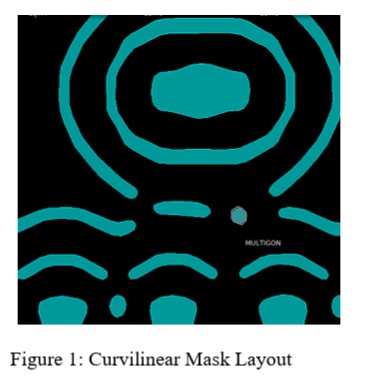
Furthermore, device scaling continues unabated, with technologies advancing beyond the N2 node and toward the emerging A14 node. The combination of multi‑beam mask writers and curvilinear data has become indispensable, and the P49 (Multigon) format defined by the SEMI standard is now being applied in production. This presentation will also offer a concise outlook on the latest manufacturing flows based on the new curvilinear data paradigm.